Bees play an important role as pollinators and are among the most beneficial insects in the world. Wasps and hornets also offer some benefits, but when a stinging insect nest appears on your property, it quickly becomes a concern. No matter their role in nature, these insects can pose a risk, especially for children, pets, or anyone with allergies.
Humboldt Termite & Pest Control brings over 29 years of experience in removing bee, wasp, and hornet nests of all kinds. Contact us today for a free estimate or to schedule nest removal service in Arcata.
Should You Remove a Wasp Nest Yourself or Hire a Professional?
Many homeowners consider using over-the-counter sprays to deal with wasp and hornet nests, but their effectiveness depends on proper use. When applied according to the directions, these products can help manage the problem.
However, using them comes with risks. Stinging insects often become defensive when their nest is threatened, making the situation dangerous. Wasps, hornets, yellow jackets, and bees can attack in large numbers, and even a small swarm has the potential to cause serious injury.
When you are unsure how to handle a nest, it is best to call the professional nest removal technicians at Humboldt Termite & Pest Control. We can take care of the problem efficiently and with the right approach. Here are some of the potential factors to be aware of:
- Allergy Risk: If you are allergic to stinging insects of any kind, do not attempt to knock a nest down, as wasps are unpredictable and can react aggressively.
- Nest Size Matters: If the nest is larger than the size of your fist, avoid trying to remove it yourself and contact a professional for help.
- Pet and Wildlife Safety: Keep animals away from wasps or bees that have been treated with pesticides, as ingesting them can cause illness.
- Complete Removal: Make sure the entire nest population is eliminated, since even a few surviving insects can rebuild and create ongoing problems.
- Indoor Chemical Use: Never spray chemical treatments inside your home, as this can create additional hazards and health concerns.
How Can You Tell a Wasp Nest from a Hornet Nest?
Different types of nests can be difficult to distinguish from one another, which is why we created this guide. It highlights the most common stinging insect nests found in our region. If you are still unsure what type of nest is on your property, our team is ready to help. Here are some of the most common types you may encounter:
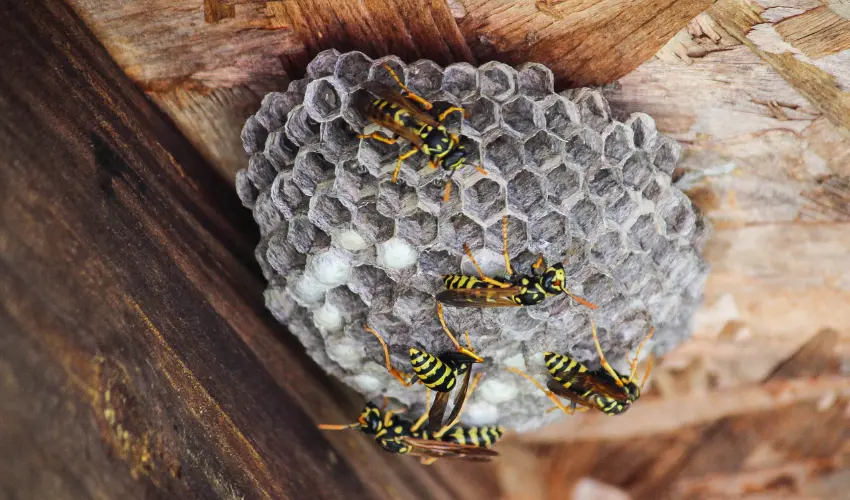
Paper Wasp
- Papery Substance: Their nests are made from a paper-like material created by chewing wood fibers mixed with saliva. This gives the nest a thin, gray, and textured appearance.
- Looks like an upside-down umbrella: The nest has an open, umbrella-like shape with visible hexagonal cells. It typically hangs downward with no outer covering.
- Supported by a single stalk: The entire nest is attached to a surface by a narrow stem. This single connection point makes the structure easy to recognize.
Bald-Faced Hornet
- Built at least 3’ above the ground: These nests are usually constructed in elevated locations such as trees, shrubs, or the sides of buildings. This height helps protect the colony from ground-level threats.
- Grow to the size of a football or a basketball: The nest can become quite large as the colony expands over time. Its rounded shape and size make it highly noticeable.
Mud Dauber
- Made out of mud: These nests are formed using mud, giving them a rough and hardened texture. They often appear brown and blend in with surrounding surfaces.
- Tubular in shape, it looks like organ pipes: The nest consists of long, narrow tubes grouped together. This unique shape makes them easy to identify.
- Found in small cracks & crevices: Mud daubers commonly build their nests in sheltered areas. You will often find them tucked into corners, gaps, or protected spaces.
Yellowjacket
- Nests found above or underground: Yellowjackets may build nests in the ground or in hidden above-ground locations. This flexibility makes them harder to locate.
- Single Opening: Their nests typically have one main entrance point used by all members of the colony. This opening is often heavily guarded.
- Can contain several thousand Insects: These colonies can grow very large, especially during peak season. The high population increases the likelihood of aggressive behavior if disturbed.
At Humboldt Termite & Pest Control, we’re always ready to help you with your pest control needs. Contact us for a free, no obligation quote, or call us at (707) 822-8644 to get started today.

Common Places to Find Nests Around Your Home
If you’ve been hearing buzzing or seeing bees or wasps flying alone on your property, a nest may be nearby. If you can’t find it, be sure to inspect these common places:
- Ground Holes or Rodent Burrows: These are common nesting spots for Yellow Jackets and sometimes Bumblebees.
- Thick Grass, Compost Piles, or Overgrown Areas: These areas may conceal Bumblebee nests from view.
- Tree Hollows or Cavities: These sheltered spaces are favored by Honeybees and European Hornets.
- Branches and Dense Foliage: Look here for large, football-shaped paper nests built by Bald-Faced Hornets.
- Under Eaves, Porch Ceilings, and Overhangs: These are typical nesting areas for Paper Wasps and sometimes Bald-Faced Hornets.
- Inside Light Fixtures, Grills, or Mailboxes: Paper Wasps often construct umbrella-shaped nests in these partially sheltered locations.
- Wall Cavities, Behind Siding, and Attic Voids: Honeybees, Yellow Jackets, and European Hornets can enter and nest within these hidden structural spaces.
- Garages, Sheds, and Outbuildings (Corners, Rafters, Storage Areas): These are frequent nesting sites for Paper Wasps, Mud Daubers, and sometimes Bumblebees.
Most Common Stinging Insects
Stinging insects are a common presence in Arcata yards, especially during warmer months when they build nests and forage for food. Below are some of the most common stinging insectsyou may come across:
- Velvet Ants: Velvet ants are actually a type of wasp. Hairy, with bright red and black markings, they are solitary and do not build nests. Don’t try to handle one of these because their sting is extremely painful.
- Yellowjackets: Yellowjackets are small and yellow with black stripes. They are some of the meanest stinging insects out there and may attack people and animals for seemingly no reason if they get too close.
- Paper Wasps: Paper wasps are slender, and their long, thin bodies feature black and yellow stripes. They build small nests under eaves and in trees. They can become aggressive fairly easily if you get too close to their nests.
- Mud Daubers: Mud daubers are black wasps with long legs and a narrow waist. They can look intimidating, but are not typically aggressive unless provoked.
- Cicada Killer Wasps: Cicada killer wasps are large, solitary, and scary-looking, but fortunately, they’re not usually aggressive and fairly harmless to people. They have black and yellow markings and dig nests in the ground.
- Carpenter Bees: Carpenter bees are large, and their coloring is similar to bumblebees, but they’re not fuzzy. They create nests in wood, which can damage structures.
- Honeybees: Honeybees are small, fuzzy, and “cute” too, with golden-yellow and black stripes. They typically nest in hives and are not aggressive unless provoked.
- Bumblebees: Bumblebees are the “cute,” round bees you’ll see with fluffy bodies and yellow and black coloring. They usually have underground nests and are rarely aggressive.
- Bald-Faced Hornets: Bald-faced hornets are black with white markings. Their large, papery nests are usually found in trees, shrubs, and buildings. They can be very aggressive and sting multiple times.
Bee, Wasp, and Hornet Nest Prevention Tips
Bees and wasps will often build nests wherever they find suitable conditions. However, you can take steps to make your yard less appealing to them. By doing so, they are more likely to move on when they arrive at your property. Here are some helpful nest prevention tips for your home:
- Seal Entry Points: Seal gaps or cracks in your home’s exterior to prevent stinging insects from getting inside.
- Secure Trash Cans: Keep outdoor trash cans tightly sealed to reduce odors that may attract bees and wasps.
- Cover Food and Drinks: Keep drinks and food covered when eating outside to avoid drawing in stinging insects.
- Avoid Bright Clothing: Avoid wearing floral prints or bright colors, which can attract stinging insects.
- Reduce Yard Clutter: Keep your yard clean and clear of clutter to eliminate potential nesting spots.
- Maintain Your Lawn: Keep your lawn trimmed and free of overgrowth to make it less appealing for nesting.
- Eliminate Standing Water: Remove any standing water from your yard, as it can attract stinging insects.
What Happens if a Bee, Wasp, or Hornet Nest Returns?
If you’re covered by a year-round protection program, we’ll return to your property and re-treat as often as necessary when new nests or colonies emerge. This proactive approach helps maintain consistent protection over time. Homeowners looking to guard against future bee or stinging insect problems may benefit from enrolling in a recurring pest management plan.
Trusted Bee and Wasp Nest Removal Services!
No matter what type of stinging insect nest you’re dealing with, our team is ready to support you every step of the way. In Arcata, stinging insects can become a recurring concern for many homeowners. We aim to provide clear communication and dependable service throughout the process. Humboldt Termite & Pest Control will work with you to ensure nests are removed carefully and your property is protected.
Contact Humboldt Termite & Pest Control today to receive your free estimate and learn more about the services we offer.